Why Hotel Restaurants Lose Money — And What a Transition Actually Fixes
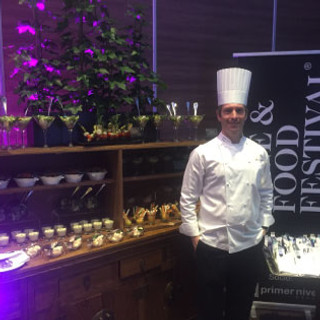

Answer first: most hotel restaurants don't lose money because the food is bad or the location is wrong. They lose money because the outlet was designed as an amenity and is being measured as a business. The kitchen is sized for banquets, the labor model is built for breakfast covers, the menu was written for a guest who no longer stays there, and nobody owns the P&L line by line. A transition fixes the structure underneath all four. It is not a re-decoration and it is not a new menu.
CBRE reported hotel food and beverage departmental profit margin at 29.1% in the first half of 2025, up from 28.7% a year earlier, with F&B revenue per occupied room growing 3.8% — faster than total hotel revenue at 3.0%. Hotel F&B is not a structurally unprofitable business. Underperforming outlets are underperforming for reasons you can name.
Below are the five reasons I find most often, and what actually has to change.
Why is my hotel restaurant losing money when the hotel is full?
Because occupancy and outlet revenue are only loosely related, and most properties never model the relationship.
A full hotel produces guaranteed breakfast covers and very little else. Dinner is a separate business competing against every independent restaurant within walking distance, and it loses that competition when the outlet is positioned as "the hotel restaurant" rather than as a destination with its own reason to exist.
The diagnostic question is not how many covers did we do. It is: what percentage of dinner covers were house guests? If the answer is above roughly 80%, you do not have a restaurant. You have a captive-audience canteen with a restaurant's cost base — a full brigade, a full front of house, and full hours — supported by demand that arrives only when the hotel is full.
That is a positioning problem, and it is solved before anyone touches a recipe.
Is the kitchen the problem, or the menu?
Usually neither, in isolation. It is the relationship between them.
Hotel kitchens are typically designed around the largest event the property can host, not the daily volume the outlets actually run. The result is a plant sized for 400 banquet covers being used to execute 45 à la carte dinners, with a menu written by a chef who is compensating for the mismatch by adding complexity.
Three structural symptoms tell you this is happening:
Prep is happening in a space designed for production. Mise en place spreads across a banquet line because no à la carte prep station was ever defined.
The menu requires stations the brigade doesn't staff on a Tuesday. Every service becomes an improvisation.
Breakfast, banquet and à la carte share inventory with no separation of accountability. Nobody can tell you what the restaurant costs, because the restaurant's food cost is entangled with two other businesses.
The fix is a workflow redesign and a menu rebuilt against the stations you actually staff — in that order. Writing the menu first is the single most common sequencing error in hotel F&B.
What does "outlet consolidation" actually mean?
It means accepting that most hotels operate more outlets than their demand supports, and that each additional outlet multiplies fixed cost, inventory complexity, and management attention while dividing the same guest.
A property running a lobby bar, a three-meal restaurant, a pool kiosk, room service and banquets is running five kitchens' worth of coordination on one kitchen's worth of volume — often with one chef. Consolidation asks a disciplined question of each outlet: does this concept generate demand, or does it only capture demand that already exists?
Concepts that only capture demand should be simplified aggressively — shared production, shared inventory, a shortened menu, adjusted hours — and the labor recovered should be redeployed to the outlet that can actually generate.
This is where the largest, fastest margin recovery usually sits. It is also the change owners resist most, because closing a service period feels like a retreat. It isn't. Running five weak touchpoints instead of two strong ones is the retreat.
What is the correct sequence for a hotel restaurant transition?
The sequence matters more than any individual decision. Done out of order, a transition produces a beautiful room with the same P&L.
Phase | What happens | Typical duration |
1. Diagnosis | Cover mix, revenue by daypart, prime cost by outlet, labor model, workflow observation across live services | 2–4 weeks |
2. Positioning | Who the outlet is for, what it must generate independently of house guests, what it stops trying to be | 1–2 weeks |
3. Structure | Kitchen workflow, station map, brigade design, purchasing and inventory separation by outlet | 3–6 weeks |
4. Product | Menu engineered against the stations and cost targets defined in phase 3 | 3–4 weeks |
5. Systems | SOPs, recipe standards, prep lists, service sequences, training, mock services | 4–6 weeks |
6. Stabilization | Live service with the operator present, daily numbers reviewed, corrections made in the room | 4–8 weeks |
Notice where the menu sits: fourth. Notice that stabilization is a phase, not an afterthought. A transition that ends on opening night has not been completed — it has been abandoned at its most fragile moment.
How do you know a transition worked?
Not by the reviews in month one. By four numbers in month six:
Non-guest cover percentage at dinner — is the outlet generating its own demand yet?
Prime cost by outlet, separated — can you even see it?
Labor cost as a percentage of outlet revenue, by daypart — is the schedule matched to the volume, or to habit?
Menu mix stability — are guests ordering across the menu, or is 70% of covers landing on four items you don't make money on?
If those four move in the right direction, the room being beautiful is a bonus. If they don't, the room being beautiful is an expense.
The structural point
Hotel F&B is one of the few departments where a property can meaningfully improve profitability without adding a single room. The margin is there — CBRE's data says so. What is usually missing is not talent, budget or creativity. It is a structure that lets talented people execute the same thing on Tuesday that they executed on Saturday.
Most restaurants don't have a food problem. They have a structure problem. Hotel restaurants are simply the version of that problem with more moving parts.
Frequently asked questions
How long does a hotel restaurant transition take?A full transition — diagnosis through stabilization — typically runs four to six months. Compressed timelines are possible when the kitchen plant does not change, but skipping the stabilization phase is what causes operations to regress within a quarter.
Can we keep operating during a transition?Usually yes, and often you should. Continuous operation preserves cash flow and gives you live services to observe and correct. Closures are warranted when the kitchen workflow itself is being rebuilt.
Should we bring in a branded concept or build our own?A branded concept buys recognition and a proven system, and costs you margin and flexibility. An owned concept keeps both, and requires that you build the system yourself. The decision should follow the diagnosis, not precede it — the honest question is whether the property has the operational depth to run its own standards without an external framework enforcing them.
Do we need a new executive chef?Less often than owners assume. In most underperforming outlets, the chef is executing correctly inside a broken structure. Replacing the person without repairing the structure reproduces the result with a new name on the schedule.
What does a hotel F&B consultant actually deliver?A diagnosis you can act on, a redesigned operational structure, engineered menus, written systems, and presence during live service while the new standard is being established. Documents alone do not change an operation. Presence during execution does.
Where should we start if we can only do one thing?Separate the numbers. Until breakfast, banquet and à la carte are tracked as distinct businesses with their own prime cost, every other decision is made on an average that describes none of them.
Paul Forciniti is a restaurant and hotel operations consultant with 25+ years in professional kitchens — line cook in Buenos Aires, culinary training in France, executive chef of a five-star international hotel, owner-operator, and author of Your Food Is Not the Problem and From Concept to Cover. He has led more than 40 restaurant and hotel projects across five countries.
Considering a transition? Every engagement begins with a structured operational review that identifies where the margin is actually going. Request an advisory review.Answer first: most hotel restaurants don't lose money because the food is bad or the location is wrong. They lose money because the outlet was designed as an amenity and is being measured as a business. The kitchen is sized for banquets, the labor model is built for breakfast covers, the menu was written for a guest who no longer stays there, and nobody owns the P&L line by line. A transition fixes the structure underneath all four. It is not a re-decoration and it is not a new menu.
CBRE reported hotel food and beverage departmental profit margin at 29.1% in the first half of 2025, up from 28.7% a year earlier, with F&B revenue per occupied room growing 3.8% — faster than total hotel revenue at 3.0%. Hotel F&B is not a structurally unprofitable business. Underperforming outlets are underperforming for reasons you can name.
Below are the five reasons I find most often, and what actually has to change.
Why is my hotel restaurant losing money when the hotel is full?
Because occupancy and outlet revenue are only loosely related, and most properties never model the relationship.
A full hotel produces guaranteed breakfast covers and very little else. Dinner is a separate business competing against every independent restaurant within walking distance, and it loses that competition when the outlet is positioned as "the hotel restaurant" rather than as a destination with its own reason to exist.
The diagnostic question is not how many covers did we do. It is: what percentage of dinner covers were house guests? If the answer is above roughly 80%, you do not have a restaurant. You have a captive-audience canteen with a restaurant's cost base — a full brigade, a full front of house, and full hours — supported by demand that arrives only when the hotel is full.
That is a positioning problem, and it is solved before anyone touches a recipe.
Is the kitchen the problem, or the menu?
Usually neither, in isolation. It is the relationship between them.
Hotel kitchens are typically designed around the largest event the property can host, not the daily volume the outlets actually run. The result is a plant sized for 400 banquet covers being used to execute 45 à la carte dinners, with a menu written by a chef who is compensating for the mismatch by adding complexity.
Three structural symptoms tell you this is happening:
Prep is happening in a space designed for production. Mise en place spreads across a banquet line because no à la carte prep station was ever defined.
The menu requires stations the brigade doesn't staff on a Tuesday. Every service becomes an improvisation.
Breakfast, banquet and à la carte share inventory with no separation of accountability. Nobody can tell you what the restaurant costs, because the restaurant's food cost is entangled with two other businesses.
The fix is a workflow redesign and a menu rebuilt against the stations you actually staff — in that order. Writing the menu first is the single most common sequencing error in hotel F&B.
What does "outlet consolidation" actually mean?
It means accepting that most hotels operate more outlets than their demand supports, and that each additional outlet multiplies fixed cost, inventory complexity, and management attention while dividing the same guest.
A property running a lobby bar, a three-meal restaurant, a pool kiosk, room service and banquets is running five kitchens' worth of coordination on one kitchen's worth of volume — often with one chef. Consolidation asks a disciplined question of each outlet: does this concept generate demand, or does it only capture demand that already exists?
Concepts that only capture demand should be simplified aggressively — shared production, shared inventory, a shortened menu, adjusted hours — and the labor recovered should be redeployed to the outlet that can actually generate.
This is where the largest, fastest margin recovery usually sits. It is also the change owners resist most, because closing a service period feels like a retreat. It isn't. Running five weak touchpoints instead of two strong ones is the retreat.
What is the correct sequence for a hotel restaurant transition?
The sequence matters more than any individual decision. Done out of order, a transition produces a beautiful room with the same P&L.
Phase | What happens | Typical duration |
1. Diagnosis | Cover mix, revenue by daypart, prime cost by outlet, labor model, workflow observation across live services | 2–4 weeks |
2. Positioning | Who the outlet is for, what it must generate independently of house guests, what it stops trying to be | 1–2 weeks |
3. Structure | Kitchen workflow, station map, brigade design, purchasing and inventory separation by outlet | 3–6 weeks |
4. Product | Menu engineered against the stations and cost targets defined in phase 3 | 3–4 weeks |
5. Systems | SOPs, recipe standards, prep lists, service sequences, training, mock services | 4–6 weeks |
6. Stabilization | Live service with the operator present, daily numbers reviewed, corrections made in the room | 4–8 weeks |
Notice where the menu sits: fourth. Notice that stabilization is a phase, not an afterthought. A transition that ends on opening night has not been completed — it has been abandoned at its most fragile moment.
How do you know a transition worked?
Not by the reviews in month one. By four numbers in month six:
Non-guest cover percentage at dinner — is the outlet generating its own demand yet?
Prime cost by outlet, separated — can you even see it?
Labor cost as a percentage of outlet revenue, by daypart — is the schedule matched to the volume, or to habit?
Menu mix stability — are guests ordering across the menu, or is 70% of covers landing on four items you don't make money on?
If those four move in the right direction, the room being beautiful is a bonus. If they don't, the room being beautiful is an expense.
The structural point
Hotel F&B is one of the few departments where a property can meaningfully improve profitability without adding a single room. The margin is there — CBRE's data says so. What is usually missing is not talent, budget or creativity. It is a structure that lets talented people execute the same thing on Tuesday that they executed on Saturday.
Most restaurants don't have a food problem. They have a structure problem. Hotel restaurants are simply the version of that problem with more moving parts.
Frequently asked questions
How long does a hotel restaurant transition take?
A full transition — diagnosis through stabilization — typically runs four to six months. Compressed timelines are possible when the kitchen plant does not change, but skipping the stabilization phase is what causes operations to regress within a quarter.
Can we keep operating during a transition?
Usually yes, and often you should. Continuous operation preserves cash flow and gives you live services to observe and correct. Closures are warranted when the kitchen workflow itself is being rebuilt.
Should we bring in a branded concept or build our own?
A branded concept buys recognition and a proven system, and costs you margin and flexibility. An owned concept keeps both, and requires that you build the system yourself. The decision should follow the diagnosis, not precede it — the honest question is whether the property has the operational depth to run its own standards without an external framework enforcing them.
Do we need a new executive chef?
Less often than owners assume. In most underperforming outlets, the chef is executing correctly inside a broken structure. Replacing the person without repairing the structure reproduces the result with a new name on the schedule.
What does a hotel F&B consultant actually deliver?
A diagnosis you can act on, a redesigned operational structure, engineered menus, written systems, and presence during live service while the new standard is being established. Documents alone do not change an operation. Presence during execution does.
Where should we start if we can only do one thing?
Separate the numbers. Until breakfast, banquet and à la carte are tracked as distinct businesses with their own prime cost, every other decision is made on an average that describes none of them.
Paul Forciniti is a restaurant and hotel operations consultant with 25+ years in professional kitchens — line cook in Buenos Aires, culinary training in France, executive chef of a five-star international hotel, owner-operator, and author of Your Food Is Not the Problem and From Concept to Cover. He has led more than 40 restaurant and hotel projects across five countries.
Considering a transition? Every engagement begins with a structured operational review that identifies where the margin is actually going. Request an advisory review.


Comments